Buying in Waikoloa Beach Resort can feel straightforward until you look under the surface. A beautiful condo may also come with multiple layers of rules, shared costs, parking limits, and rental restrictions that are not obvious from a listing. If you want your purchase to match how you plan to use the property, careful due diligence matters before you remove contingencies. Let’s dive in.
Why due diligence matters here
Waikoloa Beach Resort is a master-planned resort area within South Kohala, and that matters for buyers. In practical terms, one property can be governed by more than one set of rules, including condo documents, house rules, and sometimes a master or umbrella association.
That layered structure can affect your monthly costs, your parking rights, your storage options, and whether your rental plan works. It also means the unit that looks ideal online may operate very differently once you review the governing documents.
Start with the right documents
Before you remove contingencies, ask for the full association document package. The Hawaii Department of Commerce and Consumer Affairs says buyers should review the declaration, bylaws, house rules, current annual budget, reserve study, audit, insurance, and meeting minutes.
You should also request any amendments to those documents. That step is important because house rules can change over time, and older summaries may not reflect the current rules that apply to the unit.
Key records to request
Use this checklist as your starting point:
- Recorded declaration
- Bylaws
- Current house rules
- All recorded amendments
- Current annual budget
- Financial statement
- Reserve study or reserve summary
- Audit, if available
- Insurance summary
- Pending litigation information
- Minutes from the last annual meeting
- Approved minutes from the last three board meetings
- Any design standards or project guidelines
These records often reveal more than the listing ever will. They can show planned repairs, reserve concerns, owner delinquencies, insurance claims, capital projects, or discussion of a special assessment.
Verify the current version
Do not assume a public condo summary tells the whole story. DCCA notes that its public condo database may contain only limited summaries, so the latest recorded declaration, bylaws, and condo map should be verified with the association or the Bureau of Conveyances.
For newer projects, a Developer’s Public Report can still be useful. Still, it should not replace the current recorded documents, especially if the association has made changes since the project was first created.
Review fees beyond the monthly dues
In Waikoloa Beach Resort, the true cost of ownership may include more than one association assessment. Some condos may be part of both a project association and a master or umbrella association, which can affect your total monthly carrying costs.
That is why the annual budget and reserve study deserve close attention. These documents can help you spot whether the current dues appear stable or whether future increases or a special assessment may be more likely.
Questions to ask about costs
Ask clear, direct questions during your review:
- Is there more than one association fee?
- Are any special assessments approved or being discussed?
- What does the reserve study say about future repairs?
- Is there a recent financial statement?
- If there is no reserve study or audit, why not?
This is where a luxury purchase becomes a numbers decision as much as a lifestyle decision. You want to know not only what you will pay today, but also what ownership may require over time.
Check minutes for the real story
Board minutes and annual meeting minutes often give you the clearest picture of what is happening inside a community. DCCA specifically points buyers to these records because they can surface issues before they appear anywhere else.
When you read the last three board meeting minutes and the latest annual meeting minutes, look for recurring topics. Repairs, reserve funding, insurance claims, owner disputes, litigation, and rule enforcement can all shape your ownership experience.
What minutes can reveal
Meeting minutes may help you identify:
- Upcoming capital improvements
- Discussion of special assessments
- Insurance concerns
- Litigation or legal disputes
- Repair delays
- Delinquency or collection issues
- Repeated rule violations or owner friction
If the same concern appears more than once, pay attention. A pattern in the minutes can tell you far more than a polished marketing description.
Confirm parking and storage rights
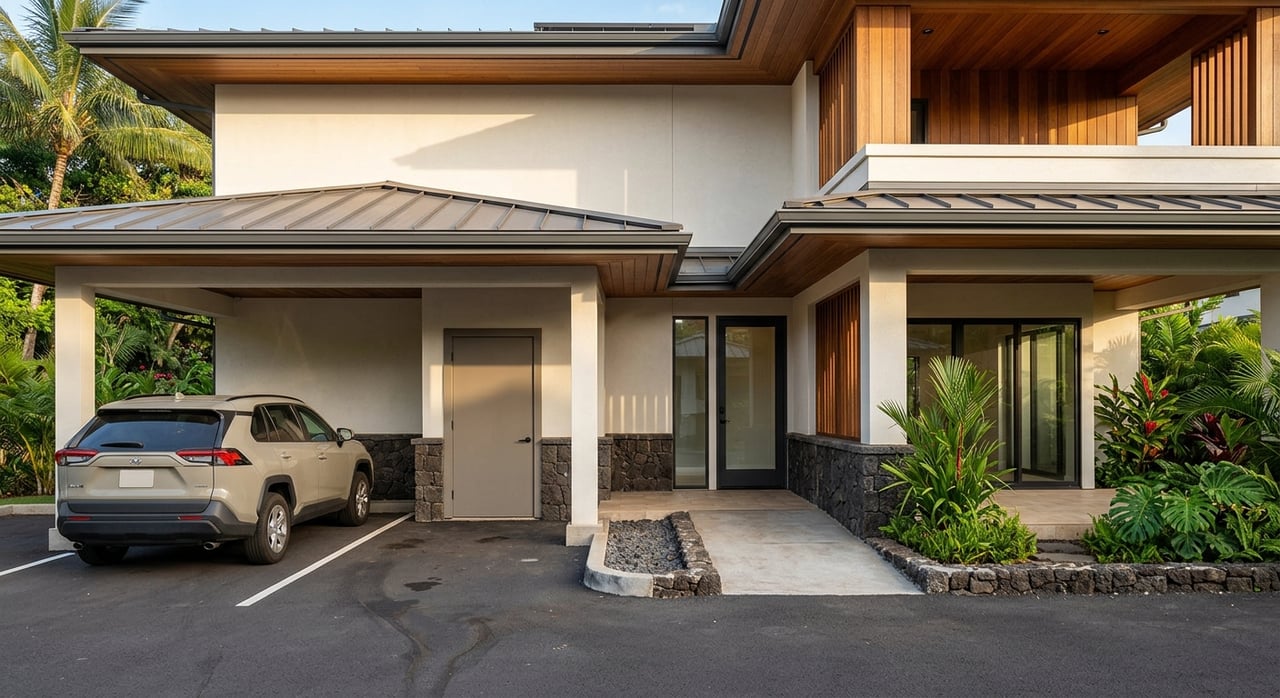
Parking and storage are part of the purchase price, even when they are not treated that way in conversation. In resort communities, a stall may be deeded, assigned, or treated as a common element, and the difference matters.
DCCA advises buyers to verify how parking stalls and storage are defined in the declaration and to confirm that the recorded description matches the actual unit. It also warns buyers to be careful with unofficial arrangements, such as stall swaps between owners that were never formally recorded.
Why this matters in Waikoloa Beach Resort
Published rules in Waikoloa projects show how different one community can be from another. For example, The Shores at Waikoloa Beach Resort uses assigned stalls and parking passes or stickers for owners, tenants, and guests, with enforcement that can include fines or towing.
Vista Waikoloa’s published rules include parking permits or passes, restrictions on common-area storage, and a ban on items such as surfboards or fishing equipment in walkways, landings, or entrance areas. Those examples are a reminder that resort living often comes with specific operational rules.
Parking and storage questions to ask
Before you move forward, confirm:
- How many parking stalls transfer with the unit
- Whether the stalls are deeded, assigned, or common element
- Whether guest parking is available
- Whether there are size limits for vehicles
- Whether overnight parking rules apply
- Whether beach gear, bikes, kayaks, or similar items have storage limits
A unit may feel perfect until you realize your intended use does not fit the actual rules. That is why these details should be confirmed in writing.
Match your use plan to the rules
If you plan to use the property part time and rent it part time, your due diligence needs to go beyond the condo docs. In Hawaii County, short-term vacation rentals are regulated through the county’s rules and forms, including registration, statement-of-compliance, and annual renewal materials for nonconforming use where applicable.
If a property depends on a nonconforming use certificate, Hawaii County says it must be renewed each year. That alone makes it important to understand exactly what status the property relies on, if any.
County rules and tax rules are separate
County compliance is only one piece of the picture. The Hawaii Department of Taxation says rental income from Hawaii real property is taxable, and short-term rentals, defined for tax purposes as rentals of less than 180 consecutive days, generally require both GET and TAT registration.
The department also states that using a property manager or third-party rent collector does not remove the owner’s tax obligations. If investment use is part of your plan, this should be part of your ownership review from the start.
Association rules may be stricter
Even if county and state requirements are satisfied, the association’s own rules may still limit your plans. Published house rules at Vista Waikoloa, for example, show restrictions related to smoking, vaping, pets, quiet hours, drones, parking, and storage.
That matters because private project rules can be stricter than public rules. A county framework does not automatically mean the unit can be rented in the way you expect.
Questions to ask about rental use
If rental income matters to you, ask:
- Does the association allow short stays?
- Is there a minimum rental period?
- Are guest counts or events limited?
- How do renters receive parking passes?
- Who handles guest compliance with house rules?
- Does the intended use fit both county requirements and association rules?
In Waikoloa Beach Resort, these answers are highly project-specific. You want clarity before contingencies are removed, not after closing.
Understand who manages the association
Not every condo project is managed the same way. DCCA notes that some associations use a managing agent, while others may rely on the board or a resident manager to handle records and day-to-day operations.
That difference can affect how quickly documents are delivered and who answers your questions. It can also shape how organized the due diligence process feels from one project to another.
Ask for the key contacts
As part of your review, request the names of:
- The managing agent, if there is one
- The resident manager, if applicable
- A board contact
- The association attorney, if any
This information helps you understand who is responsible for records, rule interpretation, and communication. It can also save time when follow-up questions come up during escrow.
Use Hawaii’s records process to your advantage
Hawaii law gives condo owners and their authorized agents a path to obtain association records. As of Act 161, approved on June 3, 2025, an association must provide an electronic copy of its governing documents at no cost to an owner or authorized agent upon request.
DCCA also notes that some requests for items like financial statements, insurance policies, contracts, invoices, ledgers, and delinquency information may require an affidavit. In some cases, the RICO request form can serve that purpose.
This matters because due diligence is not just about knowing what to ask for. It is also about knowing how to get the information in a form you can actually review before your decision deadline.
Why local guidance matters
In a resort market like Waikoloa Beach Resort, the key question is not just whether you like the unit. The real question is whether the recorded rights, governing documents, parking setup, storage rules, fee structure, and rental permissions all support the way you want to own the property.
That kind of review takes more than a quick scan of the listing. It takes local knowledge, careful document review, and a hospitality-minded approach that respects both your lifestyle goals and the practical details of ownership.
If you are considering a purchase in Waikoloa Beach Resort, a thoughtful due diligence process can help you move forward with more confidence. For tailored guidance on resort condos, second homes, and investment-focused ownership on the Big Island, schedule a private consultation with Luxury Properties Hawaii LLC and Go Luxe Realty.
FAQs
What documents should you review before buying in Waikoloa Beach Resort?
- You should review the declaration, bylaws, house rules, amendments, annual budget, financial statement, reserve study or summary, audit if available, insurance summary, litigation information, and recent board and annual meeting minutes.
Why can one Waikoloa Beach Resort condo have multiple rules?
- A unit may be governed by its condo documents, association house rules, and sometimes a master or umbrella association, which can create more than one layer of fees and restrictions.
What should you confirm about parking in Waikoloa Beach Resort?
- You should confirm how many stalls transfer, whether they are deeded or assigned, whether guest parking exists, and whether there are rules about vehicle size, overnight parking, or storage near the unit.
Can you use a Waikoloa Beach Resort condo as a short-term rental?
- That depends on both Hawaii County requirements and the project’s private association rules, since association restrictions may be stricter than county rules.
What if a Waikoloa Beach Resort property uses a nonconforming vacation rental status?
- Hawaii County says a nonconforming use certificate must be renewed annually, so you should confirm the current status and renewal history during due diligence.
Does hiring a property manager remove Hawaii tax obligations for rental income?
- No. The Hawaii Department of Taxation says using a third-party rent collector or property manager does not remove the owner’s tax obligations.